
Promotional USB Flash Drives: The Complete Australian Buying Guide for 2026
Everything Australian businesses need to know about ordering promotional USB flash drives — from storage sizes to decoration methods and budget tips.

Written by
Nate Robinson
Tech & Electronics
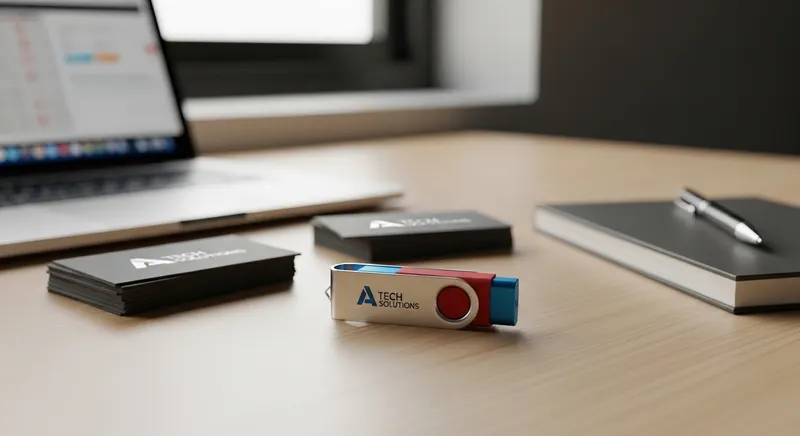
Every marketing team reaches a point where they need a branded giveaway that’s genuinely useful — something recipients will actually keep on their desk, tuck into their bag, or clip onto their keys. The promotional USB flash drive has earned its place as one of the most reliable performers in the corporate gifting world, and for good reason. In an era of cloud storage and digital downloads, a physical USB drive still carries enormous practical value, particularly in sectors like education, healthcare, real estate, and government. Whether you’re a Sydney-based events agency preparing for a major conference or a Melbourne marketing team sourcing giveaways for trade show season, a well-branded USB drive delivers your logo into the hands of clients, stakeholders, and prospects — and stays there.
This guide covers everything you need to know before placing an order: product styles, storage capacities, decoration options, minimum order quantities, turnaround times, and how to make the most of your budget.
Why the Promotional USB Flash Drive Still Works in 2026
It’s a fair question to ask. With Wi-Fi everywhere and cloud services dominating business workflows, do USB flash drives still hold their value as a promotional item? The answer, consistently, is yes — and here’s why.
First, utility drives retention. Studies and anecdotal industry data both suggest that recipients keep useful promotional items far longer than novelty ones. A USB drive that someone actually uses to transfer files, load presentation slides, or back up documents gets seen repeatedly. Every time that branded drive is plugged in, your logo is front and centre.
Second, USB drives work brilliantly as a preloaded content delivery tool. Real estate agencies in Brisbane and Perth have long used preloaded USBs to deliver property brochures, floor plans, and video tours to prospective buyers. Conference organisers in Canberra and Adelaide send delegates home with USB drives loaded with speaker slides, event agendas, and sponsor materials. This transforms the humble flash drive from a simple giveaway into a strategic communications tool.
Third, the perceived value of tech products is high. Recipients associate technology accessories with quality and innovation, which reflects positively on your brand — especially when the product itself is well-made and thoughtfully branded.
That said, not all USB drives are created equal, and making smart choices about style, capacity, and decoration will determine whether your investment pays off.
Choosing the Right USB Drive Style for Your Brand
The range of styles available for a promotional USB flash drive has expanded significantly. You’re no longer limited to the basic rectangular stick. Understanding the options helps you match the product to your audience and brand positioning.
Classic Swivel or Capless Drives
The swivel USB (where the body rotates to protect and expose the connector) is the most popular everyday style. It’s compact, durable, and works well for almost any audience. Capless designs are even simpler — no lid to lose — and are a favourite for corporate environments. Both styles offer a large flat surface area that’s ideal for pad printing or laser engraving your logo.
Credit Card USB Drives
Slim and wallet-friendly (literally), credit card USBs are a sleek option for professional services, banks, and marketing agencies. They’re distinctive, easy to carry, and feel premium. The large printable surface makes branding bold and clear.
Wristband USB Drives
Popular with sporting clubs and youth-oriented organisations, wristband USBs combine function with wearability. A Brisbane football club, for example, might distribute branded wristband drives loaded with season schedules and club information at the start of the year. They’re fun, practical, and memorable.
USB Drives with Carabiner or Keyring Attachments
These are ideal for tradies, outdoor workers, and anyone who appreciates having their drive accessible and attached. If you’re working with a client in construction or field services — perhaps sourcing branded items alongside Syzmik workwear — a USB with a carabiner clip is a natural fit.
Custom-Shaped USB Drives
For brands that want to make a bold impression, custom-shaped drives (moulded into shapes like cars, tools, buildings, or product silhouettes) are available, typically at higher MOQs and lead times. These are best suited to product launches, VIP gifting, or major exhibitions.
Storage Capacity: How Much Do You Actually Need?
Storage capacity is one of the first specifications to nail down when ordering. Here’s a practical breakdown:
- 1GB–2GB: Sufficient for basic document delivery — PDFs, brochures, presentations. Budget-friendly and suitable for large-volume giveaways.
- 4GB–8GB: The sweet spot for most corporate and event applications. Enough for preloaded content plus room for recipients to add their own files.
- 16GB–32GB: Appropriate for video-heavy content, large file sets, or when the drive is intended to serve as a longer-term storage tool.
- 64GB+: Higher cost, typically reserved for premium gifting or specialist industries like photography, design, or media production.
For most conference packs, trade show giveaways, and corporate gifting campaigns, 4GB or 8GB hits the right balance between cost and practicality. If you’re pairing the drive with other giveaways — perhaps alongside branded travel mugs or premium branded water bottles in a gift pack — keeping the USB at a mid-range capacity helps manage overall budget.
Decoration Methods for Promotional USB Flash Drives
How your logo is applied matters more than many buyers realise. The decoration method affects durability, colour accuracy, and the overall premium feel of the finished product.
Pad Printing
The most common method for USB drives. Pad printing transfers ink from a silicone pad onto the surface, producing sharp, vibrant results on flat or slightly curved areas. It’s cost-effective for bulk orders and delivers consistent quality across large runs. PMS colour matching is available with most suppliers, which is important for maintaining brand consistency.
Laser Engraving
Laser engraving removes the surface material to reveal the substrate beneath — typically a silver or gold tone. The result is a permanent, sophisticated finish that doesn’t fade or chip. It works beautifully on metal or brushed aluminium drives and feels noticeably premium. If your brand already uses laser engraving on other items — like awards, keyrings, or drinkware — it’s worth considering for your USB drives too.
Full-Colour Digital Printing
For designs with gradients, photographs, or complex multi-colour artwork, digital printing delivers the most faithful reproduction. Credit card USBs and drives with larger flat surfaces lend themselves particularly well to this approach.
Minimum Order Quantities, Lead Times, and Budget
Understanding the logistics side of a promotional USB flash drive order prevents costly surprises down the track.
Minimum Order Quantities (MOQs): Most Australian suppliers set MOQs at 50–100 units for standard styles, though some custom-shaped drives require 250 units or more. For small businesses or sporting clubs with limited budgets, the 50-unit MOQ is the most accessible starting point.
Lead Times: Standard orders with existing stock typically ship within 5–10 business days of artwork approval. Custom shapes or preloaded content may add 1–2 weeks. For events with fixed dates — conferences, trade shows, AGMs — always build in buffer time and confirm your proof approval deadline early.
Budget Considerations: Pricing varies considerably based on capacity, style, and decoration complexity. Entry-level drives at 4GB with pad printing can come in well under $5 per unit at 100+ quantities. Premium metal drives with laser engraving will sit higher. Setup fees for new artwork files are common — typically $40–$80 per colour or position — so factor these into your initial quote comparison. You’ll also want to account for any preloading fees if you’re loading content onto drives before dispatch.
If you’re balancing the USB against other promotional options — perhaps weighing them up alongside recyclable pens or stubby coolers for a mixed-product campaign — remember that USBs tend to carry a higher unit cost but also a higher perceived value.
Pairing USB Drives with Other Promotional Products
A standalone USB drive is effective, but a coordinated gift pack is memorable. Consider what else might sit alongside your branded USB to create a cohesive impression.
For a corporate conference pack, a USB drive pairs naturally with a branded notebook, a keep cup or travel mug, and a quality pen. For a university open day or TAFE enrolment campaign, a USB with preloaded course guides could sit alongside a branded tote bag or a custom varsity jacket.
If sustainability is a priority for your organisation, it’s worth reading up on sustainable promotional products to understand how USB choices fit into a broader eco-conscious gifting strategy. Some suppliers now offer USB drives made from recycled or bamboo materials, which can support your sustainability brand commitments without sacrificing functionality.
For summer events or outdoor activations — sponsorships, sporting events, market days — a USB drive might be bundled with a quick-dry towel or promotional sunscreen to create a themed seasonal pack.
You can also explore summer branded gifts for suppliers if you’re building gift packs for a year-end supplier appreciation campaign that includes tech accessories.
Artwork and File Preparation Tips
Getting your artwork right the first time saves delays and avoids reprinting costs. Here’s what to keep in mind:
- Supply vector files where possible (AI, EPS, or PDF format). These scale without quality loss and are preferred by decorators for pad printing and engraving.
- Know your print area dimensions for the specific drive model you’ve chosen — ask your supplier for a template.
- Use PMS colours if brand consistency is non-negotiable. CMYK and RGB values can shift slightly between production runs.
- For preloaded content, supply finalised files well before the production deadline and confirm the folder structure and file naming with your supplier.
If you’re also managing artwork for other merch in the same campaign, check our guidance on promotional USB sticks for additional technical tips relevant to flash drive ordering.
Conclusion: Key Takeaways
The promotional USB flash drive remains one of the most practical and high-perceived-value giveaways available to Australian marketing teams and businesses. When chosen thoughtfully and branded well, it’s a product that sticks around — in bags, on desks, and in the minds of recipients.
Here are the key points to carry forward:
- Match the style to your audience — swivel drives for corporate, wristbands for sport and youth, credit card USBs for professional services.
- Choose capacity based on use case — 4GB or 8GB covers the majority of corporate and event applications comfortably.
- Invest in the right decoration method — laser engraving for a premium finish, pad printing for large volume, digital printing for complex artwork.
- Plan your timeline carefully — factor in proof approval, preloading if required, and delivery lead times, especially around busy event periods.
- Consider bundling — a USB drive paired with complementary items creates a far more memorable impression than a single-item giveaway.
Whether you’re planning your next trade show, gearing up for a conference season, or building a supplier gift pack, a well-executed promotional USB flash drive campaign is an investment that continues delivering long after the event wraps up.