
The Complete Guide to Conference Merchandise That Delegates Actually Keep
Discover how to choose, plan, and order conference merchandise that boosts brand recall and impresses Australian delegates in 2026.

Written by
Yuki Taniguchi
Event Merchandise
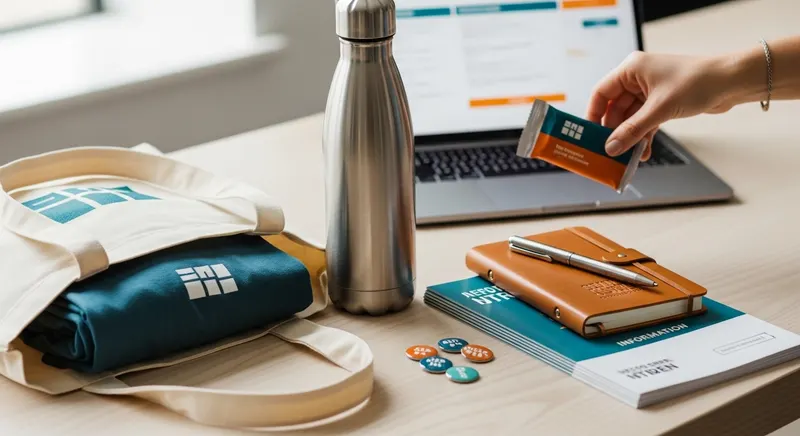
Walking away from a conference with a tote bag stuffed full of forgettable flyers and cheap pens that stop working by lunchtime — sound familiar? If you’re on the marketing team responsible for sourcing conference merchandise, you already know the difference between a delegate bag that gets tossed on the hotel room floor and one that travels home, sits on a desk, and keeps your brand front of mind for months. Getting that balance right requires more than just picking a handful of products off a catalogue. It takes careful planning, a clear understanding of your audience, and a strategic approach to how your brand shows up in the room. This guide breaks down everything you need to know to plan outstanding conference merchandise for your next Australian event.
Why Conference Merchandise Matters More Than Ever
In a world of digital everything, physical branded products cut through in a way that a follow-up email simply cannot. When a delegate picks up a quality keep cup at your Sydney trade show or notices your logo on the notebook they’re actually using at a Melbourne summit, that’s brand reinforcement happening in real life — without any algorithm deciding who sees it.
The research consistently backs this up. Promotional products generate some of the highest recall rates of any advertising medium, with recipients often remembering the brand behind the item months or even years later. For conference organisers and marketing teams, that’s a significant return on what can be a modest investment per item.
What’s changed in recent years is delegate expectations. Attendees at Australian conferences — whether it’s a government symposium in Canberra, a tech expo on the Gold Coast, or a healthcare conference in Adelaide — have become more discerning. They want products that are genuinely useful, well-made, and ideally aligned with their own values around sustainability and quality. Generic, low-effort merchandise no longer cuts it.
Planning Your Conference Merchandise Strategy
Before you start browsing product options, it’s worth taking a step back and planning strategically. The most effective conference merchandise programmes start with a clear brief.
Define Your Audience and Purpose
Who are your delegates? A national industry association conference attended by senior executives will call for very different merchandise compared to a university careers expo or a regional sporting association’s annual event. Think about:
- Demographics: Age, profession, lifestyle, commute habits
- Conference context: Is it one day or multi-day? Indoor or outdoor? Formal or casual?
- Brand positioning: Are you projecting innovation, sustainability, community, professionalism?
A Brisbane-based professional services firm hosting a two-day leadership summit will likely choose refined, premium items — think quality branded notebooks and insulated travel mugs — whereas an outdoor adventure sports expo in Perth might lean towards practical, active lifestyle products.
Set a Realistic Budget Per Head
Once you know your delegate count, work out a realistic per-head budget. For mid-tier Australian corporate conferences, a budget of $15–$40 per delegate is common, though premium events may go higher. This helps you prioritise: one or two high-quality items will always outperform a bag full of cheap fillers.
Keep in mind that most promotional products are priced on tiered bulk pricing — the more you order, the lower the unit cost. Typical minimum order quantities (MOQs) for branded merchandise range from 25–100 units depending on the product and decoration method. Always factor in setup fees for screen printing, embroidery, or laser engraving, as these can affect the cost-effectiveness of smaller runs.
Lock In Your Timeline Early
Turnaround times are one of the most common pain points for conference merchandise projects. Standard production runs for custom-branded products typically take 10–15 business days after artwork approval, with some premium or complex items taking longer. If you’re ordering from interstate suppliers or need items shipped to a venue in Darwin or Hobart, factor in freight time as well.
Aim to have your conference merchandise ordered at least six to eight weeks before your event. This gives you buffer for proof approvals, production, and any unexpected delays.
The Best Conference Merchandise Categories in 2026
Choosing the right product categories is where strategy meets creativity. Here’s a breakdown of what works, what to avoid, and why.
Drinkware: High Utility, High Visibility
Drinkware remains one of the most effective categories for conference merchandise. Delegates use it constantly — during sessions, at coffee breaks, on the commute home. Insulated travel mugs and coffee cups are perennial favourites, particularly for multi-day conferences where attendees are relying on caffeine to stay sharp.
For health-conscious delegates or outdoor-oriented events, branded water bottles are an excellent choice. They’re practical, visible, and align well with wellness-focused brand positioning. If you’re working on a conference with a sustainability angle, check out innovative options like a tea infuser bottle — a genuinely unique item that stands out from the standard offering.
Bags: The Quintessential Conference Item
A well-chosen bag ties the whole delegate pack together. The classic tote bag still has its place — particularly for events in Melbourne and Sydney where delegates may be attending multiple sessions and need to carry materials — but don’t overlook premium options.
For executive-level conferences, a quality Thule backpack makes a memorable impression and offers significant perceived value. These kinds of premium items get used long after the event, which means your branding keeps working hard.
Stationery: Practical and Always Welcome
Branded notebooks and pens remain staples of conference merchandise, and for good reason — they’re actively used during sessions. If you’re thinking about sustainability, consider recyclable pens as a responsible alternative to standard plastic options. Pairing a quality notebook with a sustainable pen signals that your organisation thinks carefully about the details.
Lanyards are another must-have for most conferences. Custom-branded lanyards worn throughout the event create consistent visual branding across your delegate base, effectively turning every attendee into a walking billboard for the day.
Tech Accessories: High Perceived Value
In a room full of people working on laptops and charging phones, tech accessories have obvious relevance. A quality branded USB drive can also double as a way to distribute conference materials, reducing paper waste while delivering a useful item. Power banks are another strong option for multi-day events where delegates are actively using devices throughout the day.
Eco-Friendly Merchandise: Meeting Modern Expectations
Sustainability is no longer a nice-to-have — it’s an expectation for many Australian conferences, particularly in the corporate and government sectors. Building your sustainability brand credentials through your merchandise choices sends a clear message to delegates. Think recycled materials, reusable products, and items with minimal packaging. A Melbourne council hosting a climate and environment forum, for example, would be well-served by a merchandise pack built almost entirely around eco-conscious products.
Decoration Methods: Getting the Branding Right
How your logo appears on conference merchandise matters just as much as the product itself. The main decoration methods each have their strengths:
- Screen printing: Cost-effective for large runs, bold colour reproduction — ideal for tote bags and t-shirts
- Embroidery: Premium, durable, professional finish — suits caps, polos, and bags (see our expertise in school uniform embroidery services for a sense of the quality possible)
- Laser engraving: Sleek, long-lasting finish on metal and timber products — perfect for drinkware and awards
- Pad printing: Versatile for smaller items like pens and USB drives
- Sublimation: Full-colour, all-over designs — great for custom apparel and lanyards
For most conference merchandise, you’ll be working with one or two primary colours to keep costs down. PMS colour matching ensures your brand colours are reproduced accurately across all items.
Standout Conference Merchandise Ideas Worth Considering
Beyond the staples, here are some options worth exploring to make your next conference pack genuinely memorable:
- Custom t-shirts for staff and volunteers: A well-designed promotional tee worn by your event team creates a cohesive, professional look throughout the venue
- Holographic stickers: Surprisingly popular with delegates, holographic stickers add a creative, shareable element — particularly for design or tech-focused events
- Stubby coolers: For Australian outdoor or networking events, printed stubby coolers are always a hit at post-conference drinks
- Branded sunscreen: Outdoor events in cities like Brisbane or Perth during summer make promotional sunscreen a genuinely practical and well-received item
- Quick dry towels: For conferences with wellness or active components, a branded quick dry towel offers real utility
- Varsity-style branded apparel: For association or sporting body conferences, a custom varsity jacket makes for a premium keepsake
Managing the Merchandise Order Process
Once you’ve made your product selections, the project management side of things becomes critical. A few practical tips:
Get samples before committing. For larger orders, always request product samples to check quality, size, and colour before you approve a full production run.
Consolidate suppliers where possible. Ordering from fewer suppliers simplifies logistics, reduces freight costs, and makes it easier to ensure consistent branding across items. If your event is in Western Australia, it’s worth exploring promotional products suppliers in Perth who can reduce lead times and shipping costs.
Brief your artwork team early. Most suppliers require vector files (AI or EPS) for decoration. Getting your artwork in order before you approach suppliers saves significant back-and-forth time.
Think about packaging. How items are presented matters. A neatly assembled delegate bag creates a strong first impression when delegates arrive at registration.
Conclusion: Key Takeaways for Smarter Conference Merchandise
Planning effective conference merchandise doesn’t need to be overwhelming. With the right approach, the products you choose can genuinely extend your event’s impact long after the last session wraps up. Here’s what to keep in mind:
- Start planning early — aim for six to eight weeks minimum before your event to allow for production and delivery
- Prioritise quality over quantity — one or two genuinely useful, well-made items will outperform a bag full of cheap fillers every time
- Align products with your audience — know who your delegates are and choose merchandise that fits their lifestyle and values
- Consider sustainability — eco-friendly conference merchandise is increasingly expected, especially in corporate and government sectors
- Match decoration method to product — the right print or engraving technique makes a significant difference to the final result and brand perception
Get these fundamentals right, and your conference merchandise will do more than just fill a tote bag — it’ll keep your brand working long after delegates have gone home.