
Screen Printing Explained: A Complete Guide for Australian Businesses and Clubs
Learn how screen printing works, when to use it, and how to get the best results for your branded merchandise in Australia.

Written by
Rani Gupta
Branding & Customisation
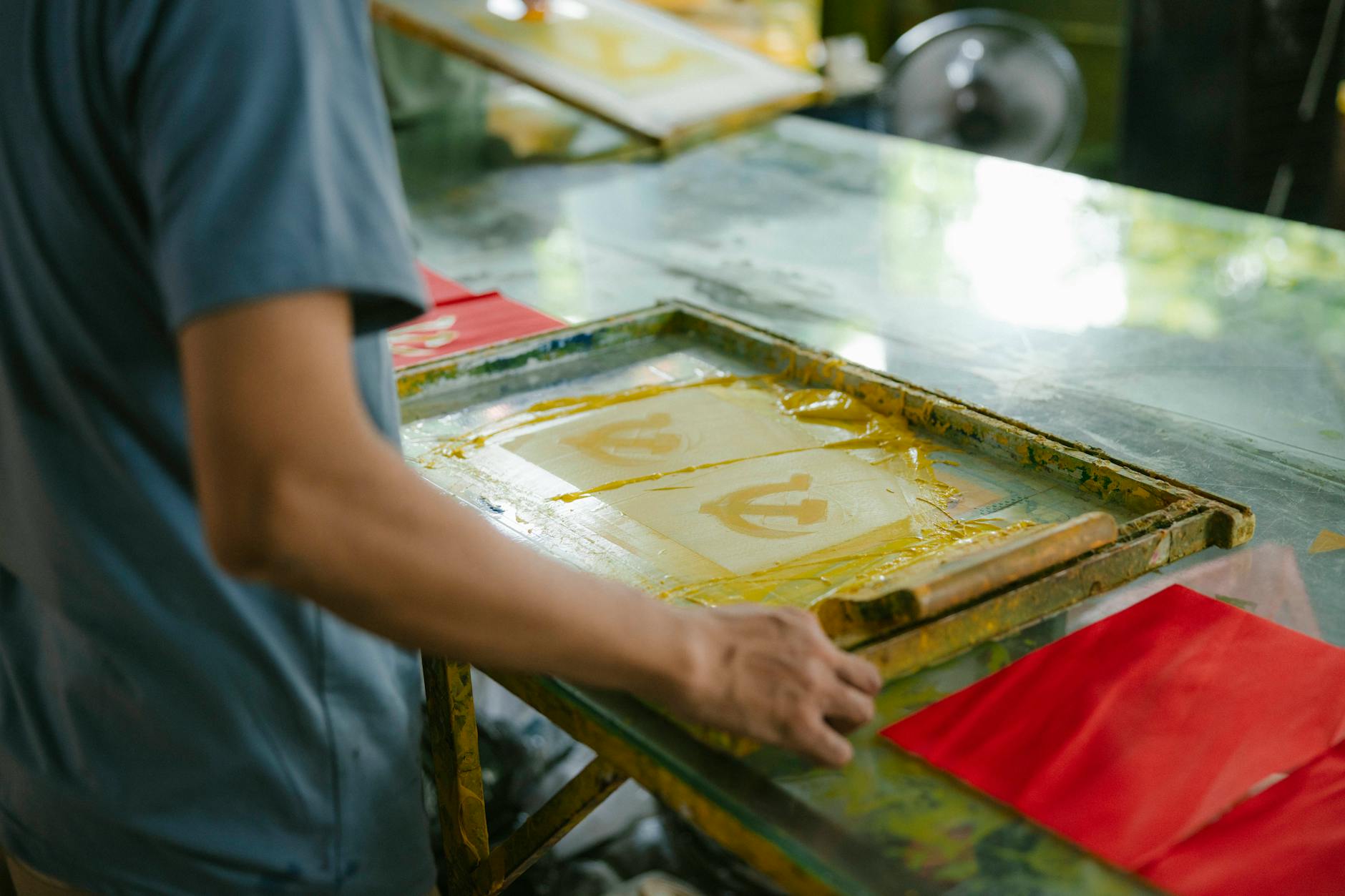
When it comes to decorating promotional merchandise and custom apparel, few techniques have stood the test of time quite like screen printing. Whether you’re a Melbourne marketing manager planning a corporate event, a Brisbane sports club ordering new jerseys, or a Sydney retail brand looking to make a statement with branded tees, screen printing remains one of the most versatile and cost-effective decoration methods available. But like any printing technique, it comes with its own set of rules, limitations, and sweet spots. Getting it right means understanding how it works, what products it suits best, and when to choose it over other decoration options. This guide walks you through everything you need to know.
What Is Screen Printing and How Does It Work?
Screen printing — sometimes called silk screening — is a printing process that uses a mesh screen, a squeegee, and ink to transfer a design onto a substrate. Each colour in the artwork requires its own stencil (or screen), and the ink is pushed through the open areas of the mesh onto the product below.
Here’s the basic process:
- Artwork preparation — Your design is separated into individual colour layers. Each layer becomes its own film positive.
- Screen creation — A mesh screen is coated with a light-sensitive emulsion, and the film is used to expose and harden the design onto the screen.
- Ink application — The screen is placed on the product, and ink is pulled across the mesh using a rubber squeegee, forcing colour through the open areas.
- Curing — Each printed item passes through a dryer or heat tunnel to cure the ink and lock it in permanently.
- Repeat per colour — If your design has three colours, this process happens three times, in perfect registration.
The result is a bold, durable, and vibrant print that holds up to repeated washing and handling — exactly what you need from promotional merchandise that’s meant to be worn and used.
Why Screen Printing Remains a Top Choice for Branded Merchandise
Despite the rise of digital printing and other decoration methods, screen printing continues to dominate the custom apparel and merchandise space in Australia. There are some very good reasons for this.
Cost-Effectiveness at Scale
Screen printing’s setup costs are higher than some other methods — you’re paying for each screen to be made — but once the screens are ready, the per-unit cost drops dramatically with volume. For promotional tees ordered in bulk, this makes it hands-down the most economical option available. A sporting club in Adelaide ordering 150 matching jerseys, or a Perth company producing branded staff tees for a trade expo, will find screen printing delivers exceptional value per piece.
Vivid, Long-Lasting Colour
The inks used in screen printing are thick and opaque, which means colours appear rich and saturated — especially on dark garments. Unlike some digital processes where fine details may fade with washing, a well-executed screen print can outlast the garment itself. This durability makes it the preferred method for varsity-style custom jackets and athletic apparel where longevity is non-negotiable.
Versatility Across Product Types
Screen printing works on an enormous range of substrates. T-shirts and hoodies are the obvious applications, but screen printing is also used on tote bags, stubby coolers, towels, and even some rigid items. If you’ve ever wondered how printed stubby coolers get that sharp, clean branding, screen printing is very often the answer.
When Is Screen Printing the Right Choice?
Understanding when to use screen printing — and when not to — is key to a successful branded merchandise project.
Best For:
- Simple to moderate designs — Screen printing performs best with solid colours and clean edges. Designs with 1–6 spot colours are ideal.
- Large quantities — Because setup costs are fixed, the more units you order, the cheaper each piece becomes. Most suppliers recommend a minimum order quantity (MOQ) of 25–50 units for screen printing to be economically viable.
- Bold branding — Large format logos, team names, and text-based designs look exceptional with screen printing.
- Cotton and cotton-blend fabrics — Screen printing ink bonds particularly well with natural fibres.
Less Suitable For:
- Photographic or gradient imagery — Complex full-colour photography is better suited to sublimation or digital printing.
- Very small orders — If you only need 10–15 pieces, setup fees may make screen printing less cost-effective than alternatives like heat transfer.
- Items with complex curves or textures — Printing on three-dimensional or highly textured surfaces requires specialist equipment.
It’s also worth noting that screen printing differs significantly from embroidery, which is the preferred method for corporate polos and formal workwear. If you’re unsure which technique suits your project, take a look at our guide to school uniform embroidery services for a deeper look at when embroidery outperforms screen printing on structured garments.
Understanding Artwork Requirements for Screen Printing
Getting your artwork right before you submit a print job is one of the most important steps in the process — and one of the most commonly misunderstood.
What Makes Good Screen Printing Artwork?
- Vector files are preferred — AI, EPS, or high-resolution PDF files ensure clean, scalable artwork. Raster images (JPG, PNG) may be acceptable at 300 DPI or higher, but vector is always best.
- Separated colour layers — Each colour in your design should be on its own layer. This makes it easier for the production team to create accurate screens.
- PMS colour codes — Pantone Matching System (PMS) codes allow printers to match your brand colours precisely, which is essential for organisations with strict brand guidelines.
- Defined print area — Know the dimensions and placement of your print before submitting artwork. Most standard t-shirts allow for a chest print area of roughly 28–35cm wide.
If your artwork is not print-ready, most Australian suppliers offer artwork preparation services for a fee. Always request a digital proof before approving the job — this shows exactly how the finished print will look, and gives you the chance to catch alignment or colour issues before any ink hits the fabric.
Screen Printing vs Other Decoration Methods
It’s useful to understand how screen printing compares to other common decoration techniques:
| Method | Best For | Key Limitation |
|---|---|---|
| Screen Printing | Bulk apparel, simple bold designs | Setup costs, not ideal for photos |
| Embroidery | Corporate wear, caps, polos | Not ideal for large prints or fine detail |
| Sublimation | All-over prints, sportswear | White/light fabrics only |
| Heat Transfer | Small quantities, complex imagery | Can feel heavy on fabric |
| Digital Printing | Short runs, photographic designs | Less durable wash-after-wash |
| Pad Printing | Pens, drinkware, small rigid items | Limited to small print areas |
For branded drinkware and accessories such as travel mugs or water bottles, pad printing and laser engraving are typically more suitable than screen printing. Knowing which method to use where is part of running a smart branded merchandise programme.
Practical Tips for Ordering Screen Printed Merchandise in Australia
Whether you’re new to branded merch or a seasoned marketing professional, these tips will help your screen printing project run smoothly.
1. Plan for Lead Times
Screen printing jobs in Australia typically require 7–14 business days from artwork approval, depending on the supplier and order volume. If you’re printing for an event — say, a Gold Coast trade expo or a Canberra government department team day — allow a minimum of three weeks from when you first contact a supplier to when you need items in hand.
2. Factor In Setup Fees
Most suppliers charge a one-off setup fee per colour, per print location. This covers the cost of making each screen. Setup fees are typically $20–$50 per colour, and they’re charged once regardless of how many units you print. This is why bulk orders always deliver better per-unit economics.
3. Consider Eco-Friendly Ink Options
Water-based and PVC-free inks are increasingly available for screen printing, and they’re worth asking about — particularly if your organisation is focused on sustainability branding or sourcing sustainable promotional products. These inks are better for the environment and often produce a softer hand feel on garments.
4. Request a Sample Where Possible
For large orders, it’s well worth requesting a physical pre-production sample before approving the full run. This is particularly important if colour accuracy is critical to your brand.
5. Think Beyond T-Shirts
Screen printing works beautifully on a range of products. Consider applying it to gym towels, quick-dry towels for sports clubs, and even some rigid promotional items. A Hobart sports club could combine screen-printed jerseys with branded towels for a cohesive pack — excellent for member welcome kits or fundraising bundles.
Pairing Screen Printed Apparel with Other Branded Items
A great promotional merchandise strategy rarely relies on one product type alone. Screen-printed tees and apparel often work best as part of a broader branded kit. Consider pairing them with:
- Branded accessories like Thule backpacks for corporate or trade show bundles
- Eco-conscious extras like recyclable pens for event goodie bags
- Functional pieces like branded water bottles or tea infuser bottles for wellness-focused campaigns
- Seasonal gifts, especially summer branded gifts for suppliers where screen-printed tees pair perfectly with cooling accessories
Thinking holistically about your merchandise mix means your brand touchpoints work together rather than in isolation.
Conclusion: Key Takeaways for Screen Printing Success
Screen printing remains one of the most powerful, versatile, and cost-effective decoration methods available to Australian businesses, sports clubs, and marketing teams. When used in the right context — the right products, the right quantities, the right artwork — it delivers results that are hard to beat.
Here are the key takeaways to keep in mind:
- Screen printing excels at bulk orders — the per-unit cost drops significantly as quantity increases, making it ideal for organisations ordering 50 or more units.
- Artwork quality determines print quality — always supply vector files, PMS colour codes, and get a digital proof approved before the job goes to production.
- It’s not the right fit for every project — complex photographic designs, very small runs, and curved rigid surfaces often call for alternative methods.
- Eco-friendly ink options are available — ask your supplier about water-based inks if sustainability is a priority for your brand.
- Think about lead times early — screen printing jobs take time, and leaving it to the last minute is the most common cause of missed deadlines on branded merchandise projects.
With the right brief, the right artwork, and a clear understanding of your needs, screen printing can deliver merchandise your team, customers, and supporters will genuinely love wearing and using.